
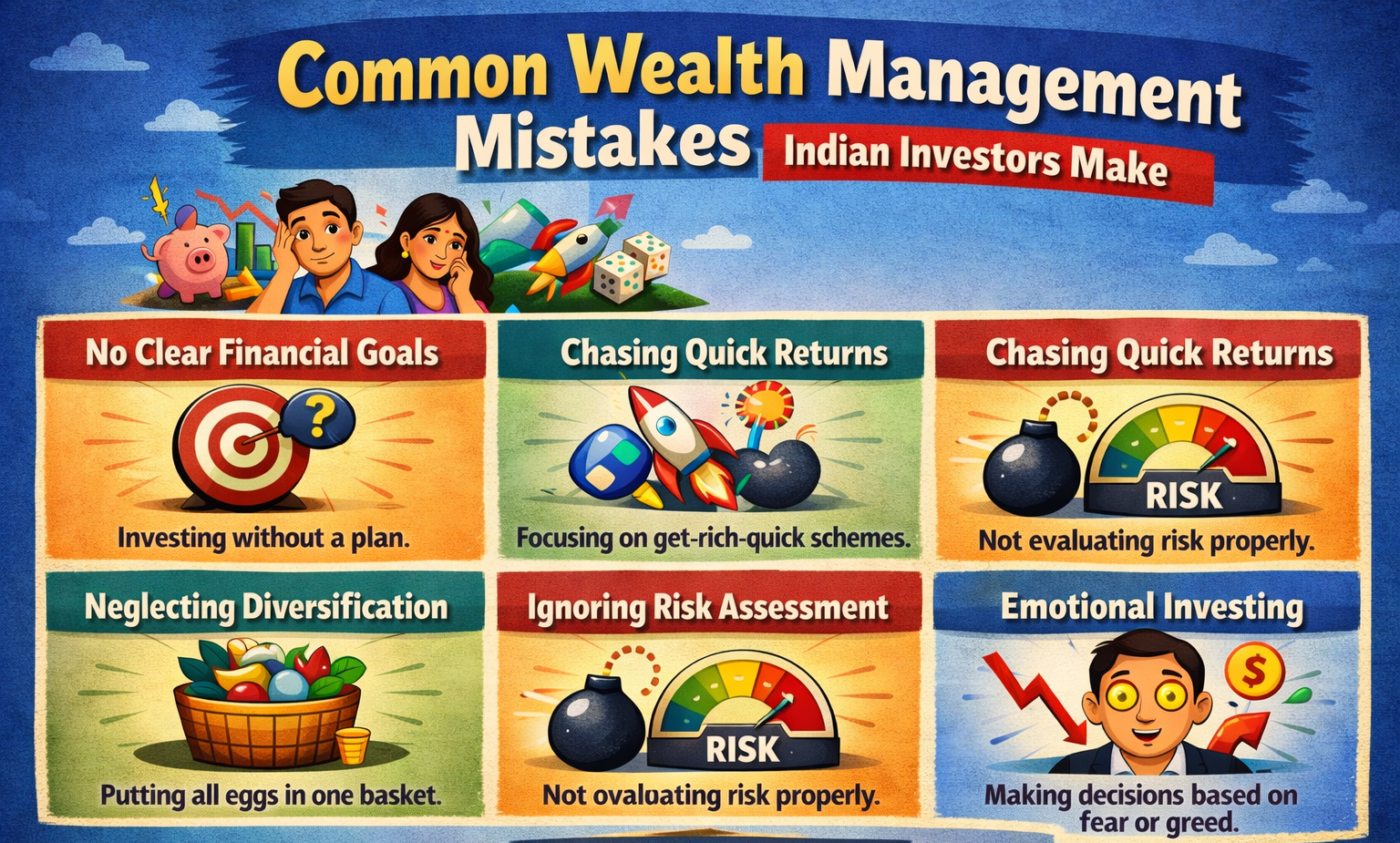
Common Wealth Management Mistakes Indian Investors Make
Wealth creation in India has changed quickly over the last ten years. With easy access to mutual funds, stocks, digital gold, crypto assets, and investment apps, more Indians are investing than ever.
However, many investors struggle to build long-term wealth despite having a good income and strong saving habits. This is not due to a lack of opportunity, but because of avoidable wealth management mistakes.
Here are the most common wealth management mistakes that Indian investors make, along with tips on how to avoid them.
1. Investing Without Clear Financial Goals
One major mistake is investing without a clear purpose. Many investors start SIPs, buy stocks, or purchase insurance-linked products simply because someone recommended them.
Why this is a problem:
· No clarity on time frame (short, medium, long term)
· Wrong asset allocation
· Poor discipline during market ups and downs
What to do instead:
Define clear goals, such as child education, retirement, home purchase, or financial independence. Align your investments with these goals.
2. Overdependence on “Safe” Traditional Instruments
Indian investors often prefer fixed deposits, recurring deposits, PPF, or endowment plans due to safety concerns.
The risk:
While these options are low-risk, they often do not keep up with inflation over time. This can lead to a loss of real wealth.
Smarter approach:
Balance safety with growth. Include equity-based investments that fit your risk profile and time frame.
3. Chasing High Returns or Market Trends
Investing based on recent performance—like hot stocks, thematic funds, or trending assets—is a common behavioral mistake.
Why does it hurt wealth creation?
· Buying at market peaks
· Panic selling during downturns
· Unstable returns over time
Better strategy:
Stick to a disciplined, long-term plan rather than reacting emotionally to market trends.
4. Ignoring Asset Allocation
Many investors either invest too aggressively or remain overly cautious throughout their lives.
Common scenarios:
· Young investors staying 100% in debt
· Near-retirees heavily invested in equities
Solution:
Adjust your asset allocation as your age, income stability, and goals change. Regularly rebalance your portfolio.
5. Not Reviewing Investments Regularly
Starting investments is only part of the process. Many investors never review their portfolios unless there is a market crash.
What goes wrong:
· Underperforming funds go unnoticed
· Changes in goals and income are not addressed
· Risk exposure becomes misaligned
Best practice:
Review your portfolio at least once a year or after significant life changes, like marriage, childbirth, or a job change.
6. Mixing Insurance and Investment
Using insurance products mainly as investment tools is a common mistake in India.
The issue:
· Low returns
· Inadequate life coverage
· Lack of flexibility
Correct approach:
Keep insurance and investment separate. Buy pure term insurance for protection and invest independently to build wealth.
7. Neglecting Tax Planning
Many investors focus solely on returns, overlooking tax efficiency.
Result:
· Higher tax payments
· Lower post-tax returns
· Missed exemptions and deductions
Smart move:
Integrate tax planning with wealth planning rather than waiting until the last minute.
8. Not Planning for Retirement Early
Retirement planning is often put off until the late 40s or 50s.
Why is this costly?
· Shorter compounding period
· Higher monthly investments are needed later
· Compromised retirement lifestyle
Key insight:
Starting early eases pressure and allows for a stronger retirement fund with smaller, steadier investments.
9. Emotional Investing During Market Volatility
Fear and greed can undermine wealth creation.
Typical reactions:
Stopping SIPs during market dips
Taking profits too soon
Panic selling during downturns
Wealth-building mindset:
Markets reward patience, discipline, and consistency—not emotional reactions.
10. Not Taking Professional Advice
Investing without enough knowledge often leads to scattered investments and missed chances.
Why professional guidance helps:
· Objective decision-making
· Tailored strategies
· Better risk management
Tip:
A trusted wealth advisor can help keep you focused on long-term goals rather than short-term market changes.
Final Thoughts
Wealth management is not about timing the market. It’s about time, discipline, and making informed choices.
By avoiding these common wealth management mistakes, Indian investors can significantly enhance their financial outcomes and move closer to true financial freedom.
Remember:
Good income creates comfort.
Good planning builds wealth.
Recent Posts
-
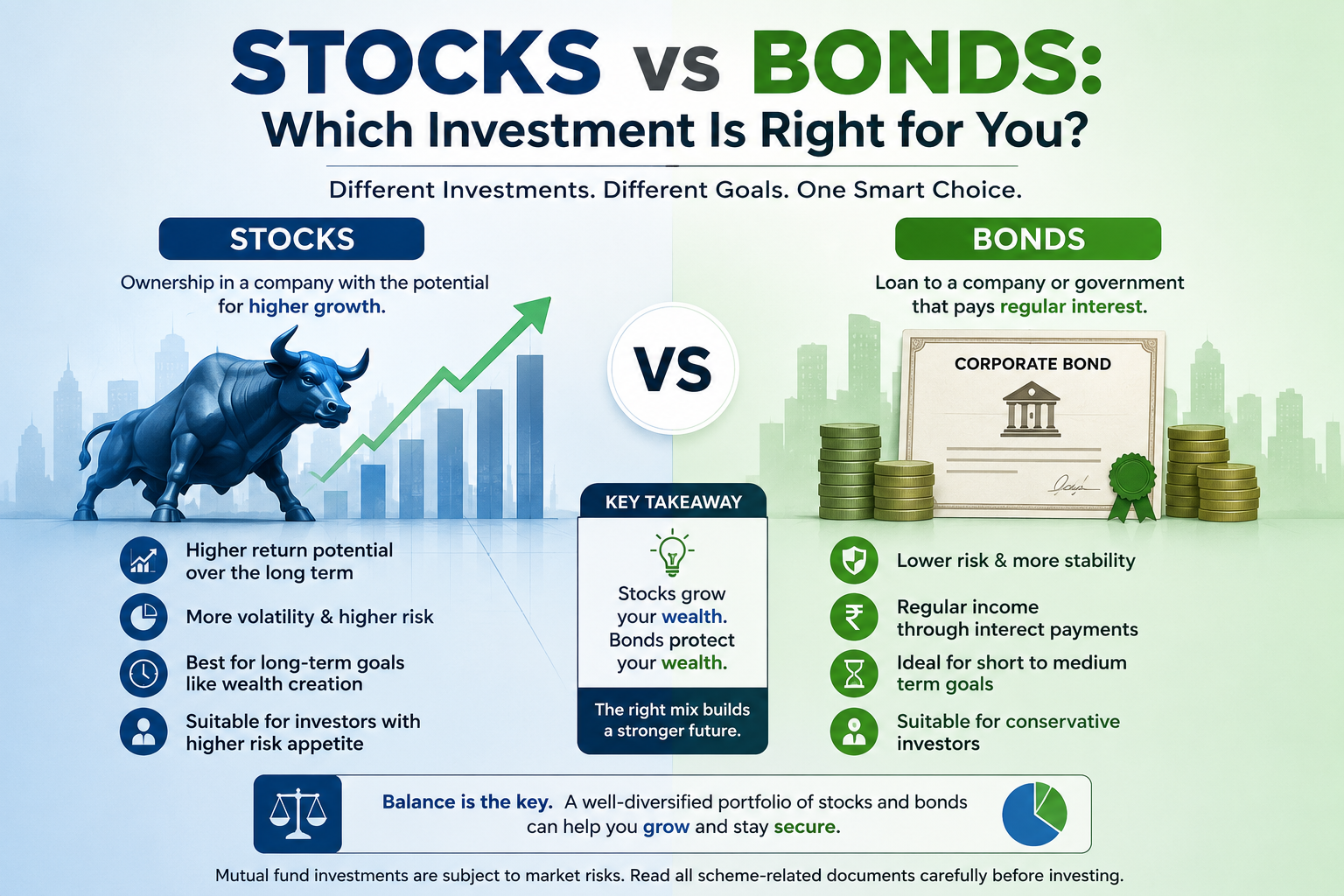
Stocks vs Bonds: Which Investment Is Right for You?
22 Jul, 2026 -

-
-

-

-
-

-

-

SIP vs Lumpsum: Which Is Better and When?
17 Jan, 2026 -

-

-

Difference Between SIP and Mutual Fund
08 Dec, 2025 -

-

Your Financial Goals Deserve Expert Guidance
Whether you're planning investments, securing retirement, or expanding your business — Larren Square helps you make smarter, well-informed decisions.